EXPANDED BIO
Mersiha Veledar graduated from The Cooper Union with a B.Arch in 2003 with Honors, followed by Princeton University where she earned an M. Arch II Degree. Mersiha is a licensed practicing architect, an educator, and the Associate Dean at The Cooper Union School of Architecture. She has been teaching and coordinating a wide range of award-winning studios and research seminars at The Cooper Union since 2005, grounded in the development of architectonic elements, civic framework and housing. The genesis of her professional work and studio pedagogy originates in her “Architecture can Heal” Thesis [advised by Lebbeus Woods and Anders Abraham], which received numerous awards and recognitions for an exploration of ‘universal elements’ common to all cultures. In her practice, she focuses on the relationship between domesticity and public space through the lens of novel architectural elements where she tests the boundaries of function and actualization of built form.
Her most recent design studio and research initiative entitled “Playful Objects: Prototyping Novel Elemental Constructions in Central Park”, explores domesticity and urbanism through the creation of an experimental “catalog” of objects, free and accessible to all, whose scale, form, and flexible functions transcend the current public elements located within the civic tapestry of Central Park. Her students at The Cooper Union used the new AACE Lab, funded by the IDC Foundation to build full scale mock-ups of these constructions which encourage community dialogue and playful public exchange. The design values these playful objects hold are conceptually linked through an exploration of a flexible kit-of-parts, where simple architectonic re-configurations by the end-users can be used as a construction guideline to maximize use and function through the public’s imagination. In parallel, the foundations of her work as an architect have been inspired by other intimately scaled elements such as doors, windows, columns and stairs to furniture objects such as chairs and tables, as a universal alphabet of design fundamentals.
Her most recent professional work on multi-functional elements explores the healing effects of nature and community interaction within public spaces in New York, was published in “Conceiving the Plan: Nuance and Intimacy in Civic Space” by SKIRA. The project was part of a group exhibition at the Venice Biennale and The Cooper Union. These urban elements are conceptually linked through the lens of design universality, multitude of functions and accessibility, and an embrace of diverse groups, from children to the elderly, and individuals with physical disabilities. Hidden dynamic aspects within these objects encourage spatial flexibility that can be customized directly by its users without aesthetic bias or compromise. She is currently working on an upcoming book publication on ‘universal architectonic elements’ in collaboration with Architectural Publisher B in Denmark (2026-27).
These individual lexicons and elements are the foundations of her practice, her research and her pedagogy as an educator at The Cooper Union for the past twenty years. Her studios have been recognized by the prestigious Studio Prize by Architect Magazine for top Studio in North America, RIBA Royal Medal award for “World's Best Projects”, and showcased in numerous exhibitions and publications. The initial eight years of her teachings with Diane Lewis on civic urbanism have been published in “Open City: Existential Approach,” by Charta. Furthermore, her research on “Healing the City: Elemental Constructions and The Universal Language of Architecture” was selected and published by the ASCA New Instrumentalities Chapter. These elemental conditions were deployed in her new building integrated ‘collective living’ housing studio initiative that she taught and coordinated in collaboration with Help USA non-for-profit organization and the New York City Public Housing Authority, with a focus on alleviating homelessness through affordable housing initiatives in New York City.
In her practice, she investigates the relationship between architectural elements and the organization of domestic space, considering how these forms reflect a society’s aspirations for innovation as well as its engagement with broader cultural and ethical transformations. Alongside Kayla Montes de Oca, Mersiha was recently awarded a grant from the New York State Council on the Arts (NYSCA) and The Architectural League of New York to develop an exhibition at The Cooper Union (2027) examining the housing developments of Herman Jessor and Abraham Kazan. The project focuses on the development of a catalog of elements related to community-engaged affordability and the innovative use of shared spaces. Situating New York City’s contemporary housing crisis within a longer history of structural exclusion, this research and design project is focused on the development of a new “residential grammar of elements” as a visual catalog of collective spaces and the policies that sustain them.
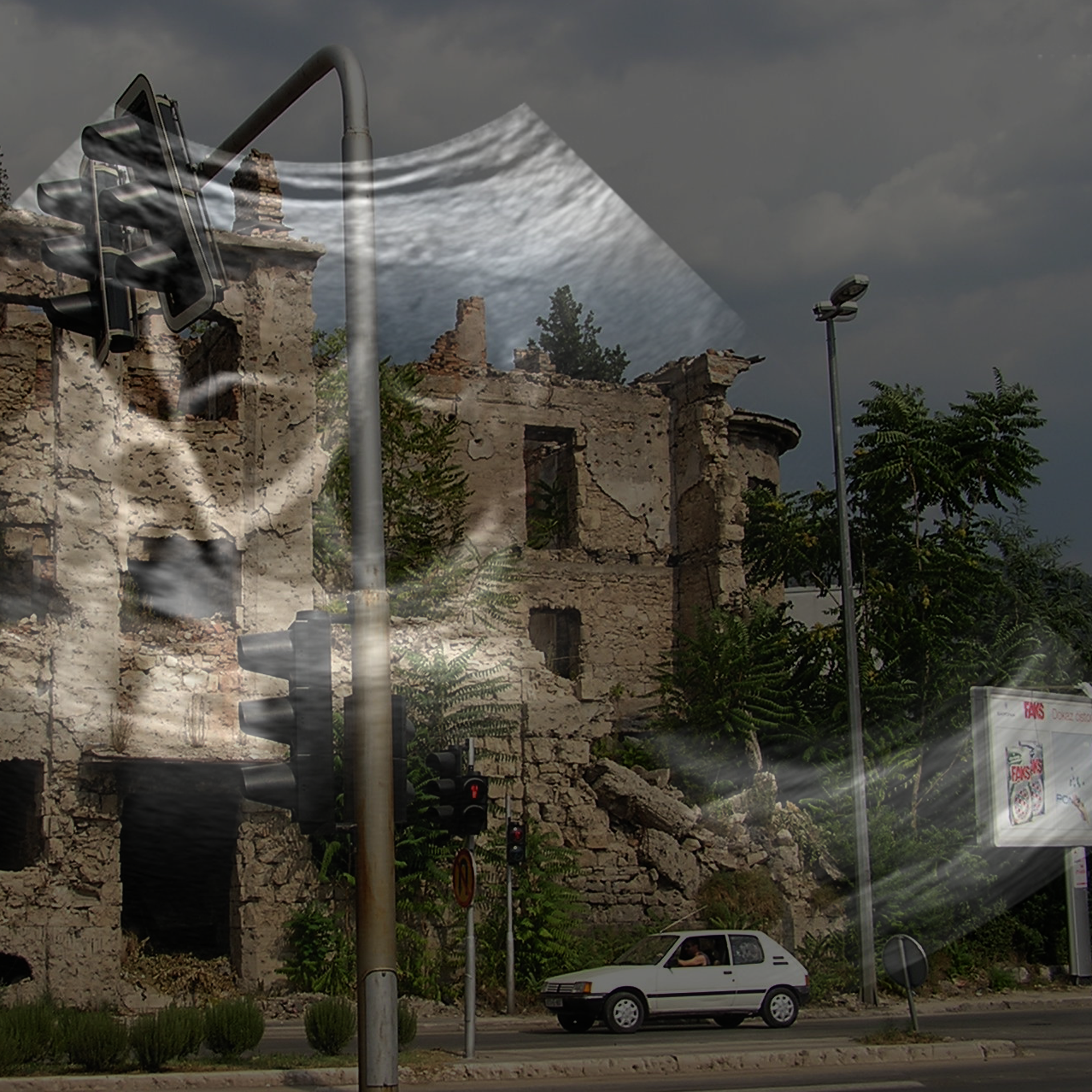
Mersiha has lived in New York City since 1995 where she found refuge through The United Nations refugee program following her survival of war/genocide related injuries she experienced in her childhood in Mostar, Bosnia and Herzegovina. Having witnessed the strategic erasure of countless residential neighborhoods, schools, libraries, and public spaces, she understood early in her life the fragility of human life and architecture. She restarted her life at age fourteen within the diverse community of Astoria, Queens and has devoted herself to the research of universal design frameworks while teaching generations of new architects to embrace ethical design that is kind, inclusive and humane.